Long before refined sugar arrived in the valleys of Chitral, sweetness came from nature.
Wild honey and sun-dried apricots were among the region’s most prized foods. Honey in particular was rare and precious. Locals would search steep mountainsides and rocky cliffs for wild bee colonies hidden in inaccessible places. The harvest was often difficult and dangerous, but the reward was highly valued. Honey was reserved for honoured guests, celebrations, and special occasions.
That respect for honey remains strong today.
The story of Villa Ayun’s honey began not as a business venture, but as a personal pursuit.
Masood Ul Mulk, patron of Villa Ayun and an enthusiastic honey connoisseur, had always been particular about the honey he consumed. As honey production expanded across Pakistan, he found it increasingly difficult to find honey whose quality he could trust. For someone who appreciated pure honey, reliable sources became harder to find.
Rather than continue searching for one, he decided to create his own.
At around the same time, he was overseeing development programmes across the region where local communities were given livelihood training, including in modern beekeeping techniques. Hundreds of women and men learned how to manage hives, harvest honey, and market their products as a sustainable source of income.
Among those Masood encouraged to receive training was a young man from Ayun named Imdad.
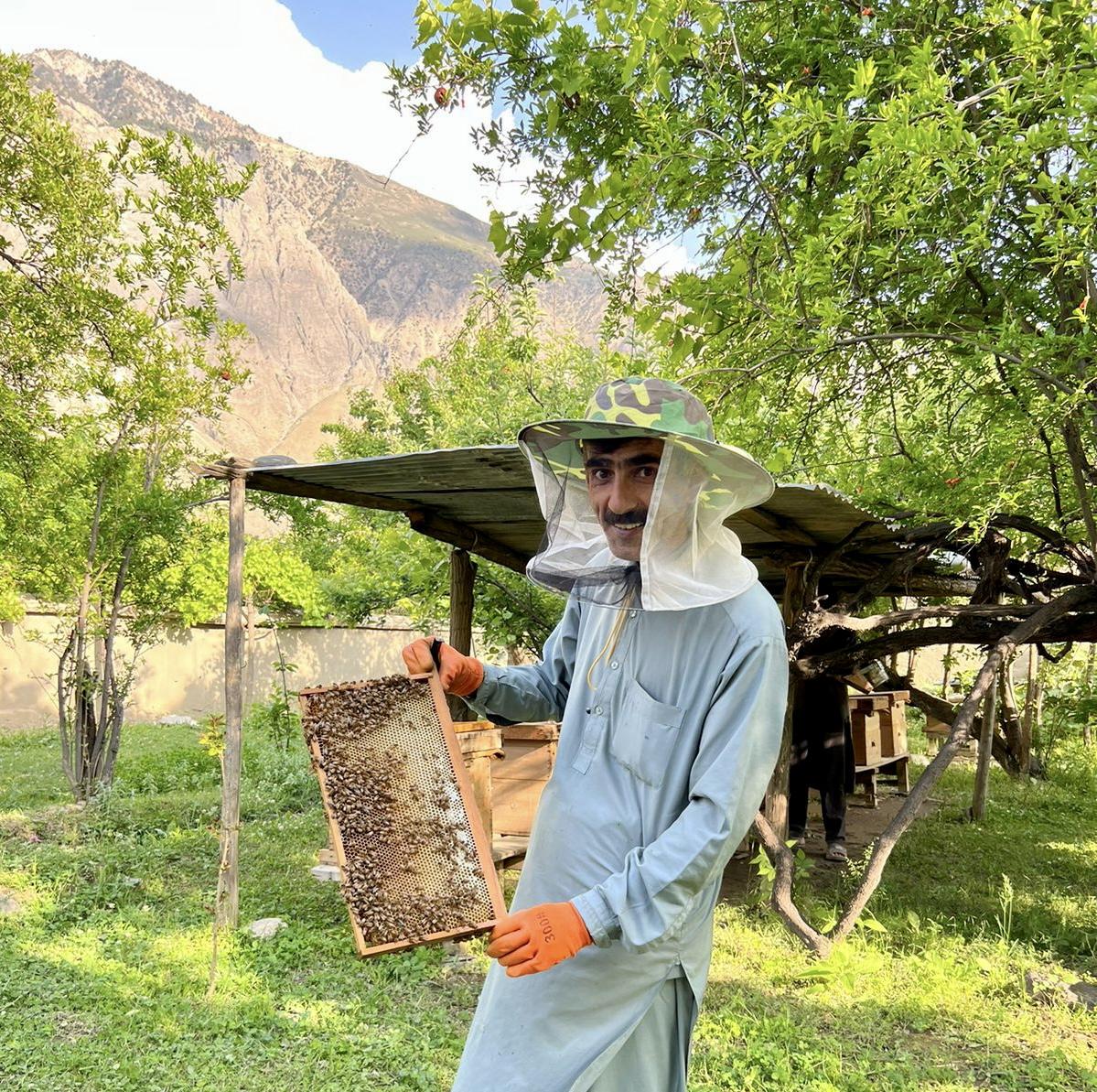
At the time, Imdad spent much of his time on the river, where fishing formed part of the rhythm of daily life in the valley. Masood recognised both his potential and the opportunities that beekeeping could create. He encouraged him to train in apiculture, and what began as a practical skill quickly became a passion. Imdad proved to be a natural beekeeper, developing the patience and attentiveness needed to manage healthy colonies.
When the time came to establish a small apiary on the Ayun estate, there was no question who would lead it.
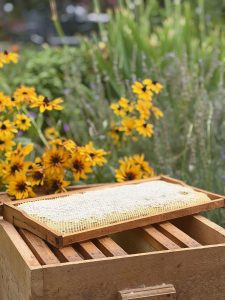
The estate itself was ideally suited to honey production. Over decades, its gardens and orchards had been transformed into a diverse botanical collection. Hundreds of Robinia trees and lavender flowered in spring, while apple, pear, apricot, cherry, plum and mulberry trees provided successive waves of blossom. Flowering plants filled the gardens throughout the season, and beyond the estate the surrounding valley offered access to wildflowers and native vegetation.
The first hives were established within the gardens in 2007, and the results exceeded expectations. Honey yields during the early years were remarkably high. Additional hives were purchased and the apiary expanded steadily. Today, Villa Ayun’s apiary consists of around 35 hives spread across the estate.
The honey itself changes with the seasons.
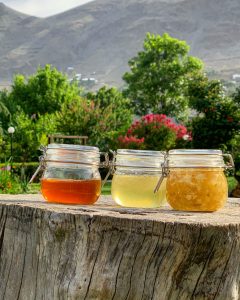
Harvested between May and August, each batch reflects the blossoms available at that particular time of year. Early-season honey is often lighter in colour and flavour, while later harvests tend to be slightly darker and more intense. Weather plays an important role. Calm conditions and abundant blossom can produce exceptional harvests, while strong winds or untimely rain may reduce yields considerably.
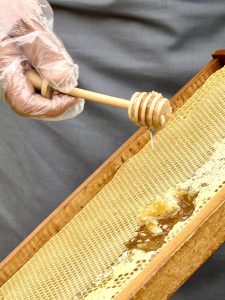
The harvest is never entirely predictable, which is part of its appeal.
In a good year, the apiary can produce over hundreds of kilograms of honey. In others, nature dictates otherwise.
What has remained constant is the commitment to preserving the character of the honey itself. It is harvested raw and never heated. Batches are gently clarified while remaining minimally processed. Rather than striving for uniformity, the aim is to preserve the subtle differences that make each season unique.
The quality soon attracted attention beyond Chitral. A cousin of the family, Qasim Tareen, pioneer of the farmers market movement in Pakistan, began selling the honey in farm markets in Islamabad and Karachi, where it developed a loyal following among customers looking for honey from a trusted source.
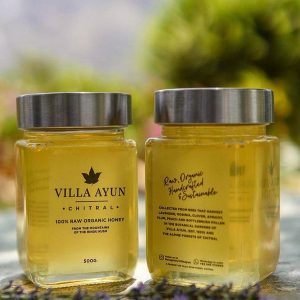
When Villa Ayun later welcomed guests, many who tasted the honey wanted to take some home. It is now sold under the Villa Ayun label and remains one of the estate’s most popular products.
Since receiving his training, Imdad has spent nearly two decades working with bees. Alongside managing Villa Ayun’s apiary, he has helped train hundreds of others across the valley, including an estimated 500 to 1,000 women who have gone on to establish their own hives and honey-producing enterprises. Younger members of the Villa Ayun staff have also learned the craft under his guidance, ensuring that these skills continue to be passed on.
For guests visiting Villa Ayun, a jar of honey is far more than a souvenir.
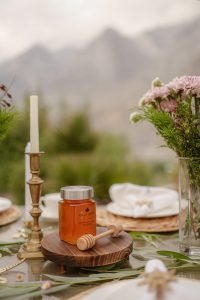
It is the product of a particular place: flowering orchards, generations of stewardship, millions of journeys made by bees, and the people who care for them. The appeal of the honey lies in more than taste alone. It represents a tradition that stretches back centuries in Chitral, a craft that rewards patience rather than speed. No two harvests are ever exactly alike.
Perhaps that is what Masood Ul Mulk was searching for all along: not simply honey, but authenticity. Something made carefully, by people he trusted, from a landscape he understood. The reassurance of knowing where they honey came from, who produced it, and what went into it.
In an age of mass production, that remains surprisingly rare.