When people think of tourism, they often think of hotels, transport, restaurants, and attractions.
Less visible are the local crafts, traditions, and skills that give a place its identity.
Yet these are often the first things to disappear.
Across the world, traditional handicrafts are increasingly under pressure. Machine-made alternatives are cheaper, faster, and easier to produce at scale. Skills that were once passed from one generation to the next can quickly become economically unviable, particularly in remote regions where access to markets is limited.
Chitral is no exception.
The region possesses a rich heritage of textile traditions, embroidery techniques, woodwork, weaving, and craftsmanship. Many of these skills survive because of the dedication of individuals who continue to practise them despite limited commercial opportunities. Preserving them requires more than admiration. It requires creating pathways through which artisans can earn a livelihood from their work.
At Villa Ayun, supporting local culture has always extended beyond preserving historic buildings. It also means supporting the people and traditions that make Chitral distinctive.
One of the clearest examples of this has been Villa Ayun’s long-standing collaboration with Meržuri, a women-led craft enterprise founded by Madina Zia Ul Mulk.
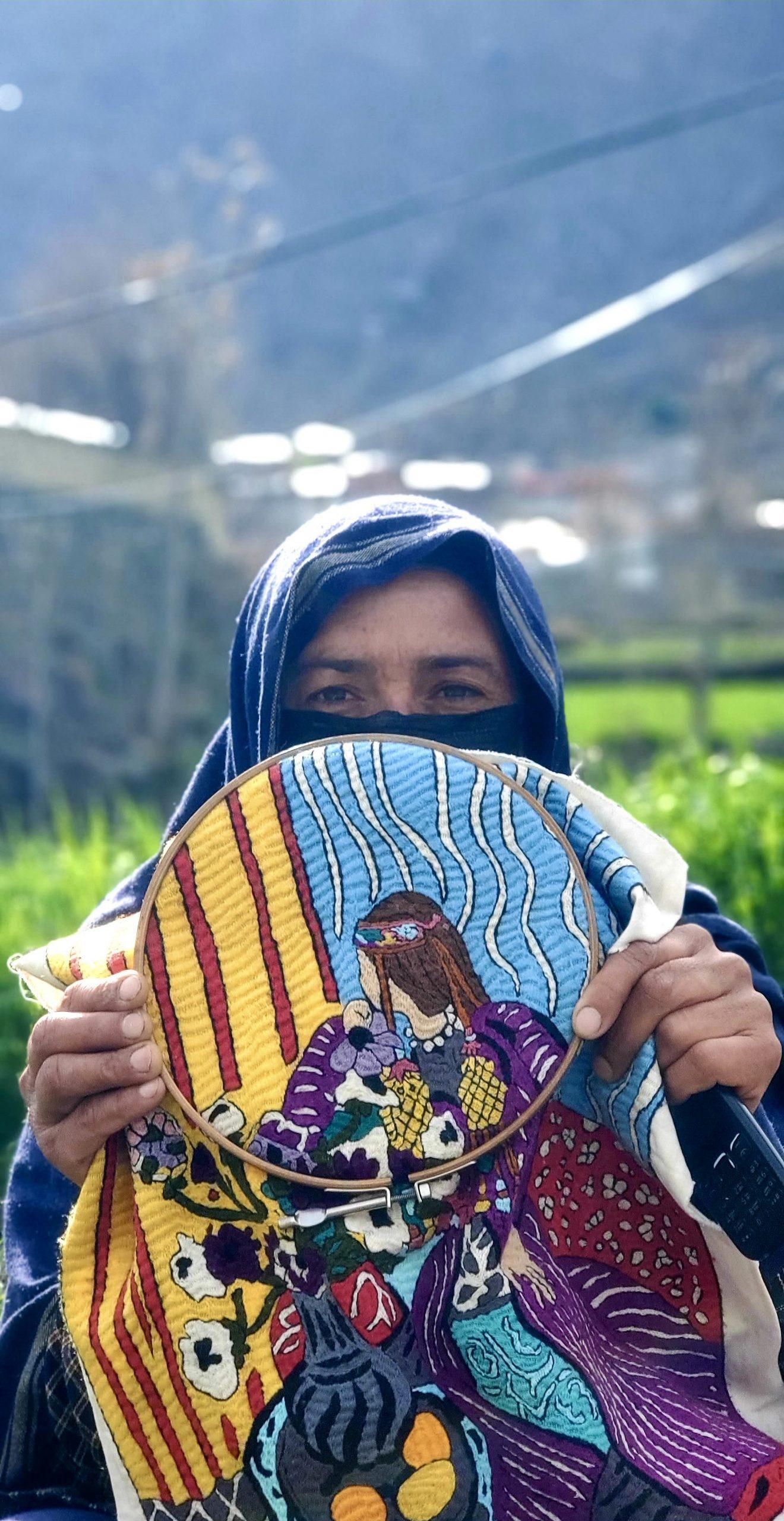
A graduate of the National College of Arts, Madina established Meržuri with a simple but ambitious goal: to preserve indigenous Chitrali craft techniques. Drawing inspiration from traditional heirlooms, textiles, and embroidery passed down through generations of her family, she sought to create products that respected traditional craftsmanship while remaining relevant to modern lifestyles. The enterprise collaborates directly with female artisans in Chitral who work from home, creating flexible opportunities for income generation where conventional employment options for women are limited.
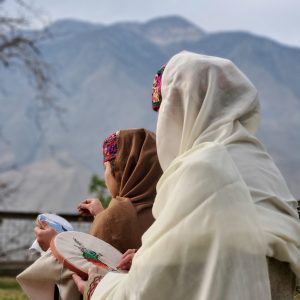
Like many emerging artisan brands, Meržuri faced a question familiar to countless small enterprises: how does exceptional craftsmanship find a market that will sustain it?
For many artisans living in remote mountain communities, access to customers can be a greater obstacle than production itself. Beautiful products mean little if they remain unseen.
Recognising both the quality of the work and its potential impact, Villa Ayun chose to support the initiative from its earliest stages, before the brand had formally launched.
Madina, founder of Meržuri, brought her training as a textile designer and deep understanding of Chitrali craft traditions. Maria Ul Mulk, co-founder of Villa Ayun, brought marketing and brand development expertise, and an understanding of what contemporary consumers look for in their living spaces. She encouraged the brand to move away from reproducing historical motifs and forms to reimagining traditional craftsmanship for a contemporary audience. Together, they explored how traditional embroidery techniques could be adapted into products that felt relevant to modern buyers and also commercially viable.
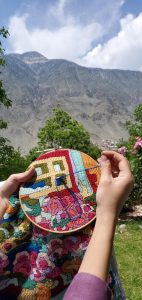
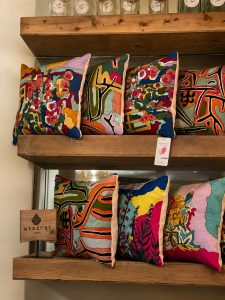
One of the earliest outcomes was a collection of kalami embroidered cushions inspired by modern art, including a Picasso-inspired design that would go on to become Meržuri’s most sought after bespoke pieces at Villa Ayun. The collection demonstrated that traditional craftsmanship could find entirely new audiences when presented through a contemporary lens.
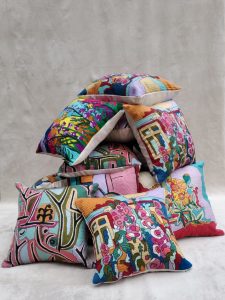
One of the brand’s earliest exhibitions was hosted at Villa Ayun, bringing together guests and supporters of the arts. The exhibition sold out, demonstrating that there was genuine demand for thoughtfully designed products rooted in Chitral’s cultural heritage.
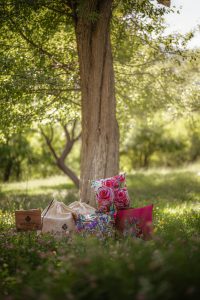
During the brand’s early years, Villa Ayun became an important platform through which new audiences encountered Meržuri’s work. Through its growing audience, social media presence, and network of visitors, Villa Ayun helped introduce the brand to new customers. Connections were facilitated with publications, journalists, and creatives who helped bring wider attention to the work being produced by Meržuri and its artisans.
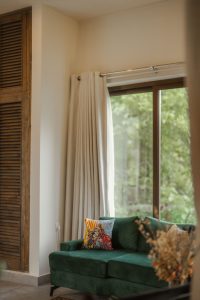
Importantly, Villa Ayun continues to showcase and retail Meržuri products on-site, allowing visitors to discover and purchase them throughout the year. Many of the handcrafted cushions and textile pieces developed through these collaborations also became part of Villa Ayun’s interiors, allowing guests to encounter Chitrali craftsmanship as a living part of the property itself.
The motivation was straightforward: Villa Ayun believed the work deserved to be seen. The craftsmanship, originality, and quality of what Madina and her artisans were creating felt too exceptional to remain confined to a local audience.
Today, Meržuri has grown into a recognised brand in its own right. Its products are sold through some of Pakistan’s leading marketplaces and design platforms, reaching customers far beyond Chitral.
Meržuri’s success belongs to its founder, its artisans, and the quality of their work. Villa Ayun’s role was to provide creative direction, a launch platform, open doors, and help connect exceptional craftsmanship with the audience it deserved.
Perhaps most importantly, the success of Meržuri demonstrates something larger.
Sustainable tourism is not simply about attracting visitors. It is about ensuring that local communities benefit from tourism in meaningful ways. Sometimes that means employing local staff. Sometimes it means sourcing locally. And sometimes it means pushing a startup in the right direction and using a platform to help small enterprises find the visibility they need to thrive.
Today, Merzuri provides income generating opportunities to over 250 women across rural Chitral.
The goal is not for Villa Ayun to own these initiatives, but to help create conditions in which they can flourish independently. Meržuri’s journey demonstrates what can happen when exceptional craftsmanship is matched with opportunity, visibility, and belief.
For Villa Ayun, helping create those connections remains one of the most meaningful ways tourism can contribute to the communities that make a place special.