While growing up, when our family visited Chitral for the summers, holding deep conversations with my grandfather in our veranda at Ayun, or the lawn under the star lit-sky or the shade of his favorite walnut tree – discussing life, history, culture, theology, philosophy, science, morality and more, was an integral part of the summers. While the subjects were all somber, and I was hardly a teenager then, I was nevertheless enamored by the enlightened conversations. My grandfather had the special ability to provoke intellect, and cause one to indulge and question.
It was during the course of such sittings that I would inquire about the history of the State of Chitral and its legal system. And my grandfather, who was an avid reader, and had the opportunity to witness up close the organizational apparatus of the State of Chitral in operation, would enchant me with his deep conversations. He was a witness to a significant number of events of immense importance in the life of the State of Chitral during the 20th century.
It was from my grandfather that I learnt in detail, about the Mehtar’s Court and the mahraka durbar, describing which Lord Curson wrote “Chitral, in fact, had its parliament and democratic constitution. For just as the British House of Commons is an assembly, so in Chitral, the Mehtar, seated on a platform and hedged about with a certain dignity, dispensed justice or law in sight of some hundreds of his subjects, who heard the arguments, watched the process of debate, and by their attitude in the main decided the issue. Such durbars were held on most days of the week in Chitral, very often twice in the day, in the morning and again at night. Justice compels me to add that the speeches in the mahraka were less long and the general demeanour more decorous than in some western assemblies”.
The inspiration to write Chitral State: A Legal History garnered support when I could not find any comprehensive book which explained the legal system of the erstwhile State of Chitral. A multitude of books have been written on Chitral from historical, geographical, sociological and military perspective, yet there was no comprehensive book on the region from a legal or juristic perspective.
When did the State of Chitral witness genesis? What form of government did it have? What were the contents of its customary laws? How were proprietary rights, state obligations, individual liberties, crime, conscription, matrimonial disputes, taxation and natural resources regulated? Who were the various state functionaries, and what were their powers and duties? What were the indigenous Courts, and how did they dispense justice? What was the effect of British suzerainty and paramountcy on the State of Chitral? How did the State of Chitral become a part of Pakistan in 1948? Why did the State of Chitral continue to remain a princely state till 1969? A dearth of answer to such questions prompted me to undertake the task of writing Chitral State: A Legal History, and with plenty of commentary from my grandfather explaining the antiquated system, I decided to embark. The book makes a faithful attempt to answer such questions.
It took me almost seven years, gathering material from hundreds of verifiable sources, and old archives, to construct a coherent narrative of the past, which I hope, will preserve for posterity, a juristic account of the past.
Preservation of the history is an enterprise which is close to my heart. The history of Chitral is rich with tales of expansion and conquest, sieges and belligerence, heroism and betrayal. It attends to statecraft and nation building, dispute resolution and adjudication, foreign policies and internal governance. It is precisely owing to such an eventful and lively past, that amongst those who have written about Chitral are towering figures likes Sir George Scott Robertson, Gottlieb Wilhelm Leitner, Georg Morgenstierne, General Sir William Lockhart, Sir Aurel Stein and General Sir George John Younghusband.
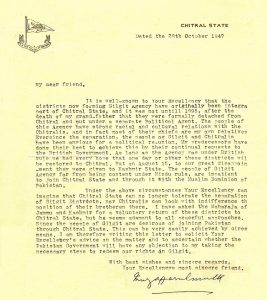
Events of the past have the potential to shape the course of history for decades and sometimes centuries to come. For example, the decision of the then Ruler of Chitral, Mehtar Aman Ul Mulk to resist pressure from Amir Abdur Rahman Khan in the 1880’s and forgo an alliance with the Afghanistan, in favour of an alliance with the British, was indispensable in placing Chitral on the eastern side of the Durand Line, and later determinative of Chitral becoming a part of Pakistan, as opposed to Afghanistan.
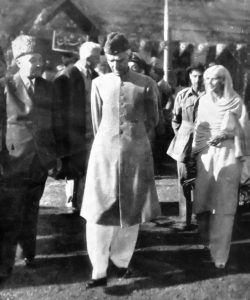
The war of succession which followed the demise of Mehtar Aman Ul Mulk in 1892 was so enthralling and strategically important for the British Empire, that it was debated many times in the House of Commons, and compelled the likes of Sir Winston Churchill to write about it comparing the Siege of Chitral to the landing of William of Orange in 1688
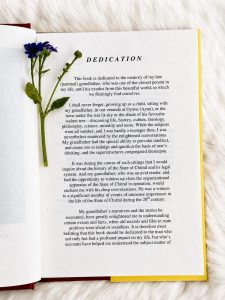
The book is dedicated to the memory of my late (paternal) grandfather, who was one of the closest person in my life, until his exodus from this beautiful world, in which we fleetingly find ourselves. My grandfather’s narratives and the stories he recounted, have greatly enlightened me in understanding certain events and facts, when old records and files in state archives were silent or soundless. It is therefore most befitting that the book should be dedicated to the man who not only has had a profound impact on my life, but who’s accounts have helped me understand the subject matter of the book.
I shall forever remember my grandfather as a warm and loveable human being who emancipated the imagination of a child by disclosing how beautiful, how meaningful and how purposeful this world was – and could be. He lived in perpetual awe of the myriad ways in which providence had enriched an orbiting mode of dust suspended in a sunbeam, while the winter of darkness subsisted all around. He could marvel the melody of the birds, the pouring of the rain, the dye of wild flowers and the star covered sky. For him the fragrance in the air, the glow in the horizon and the stillness of calm water were all testaments of the magnificence of life, which he saw as one great odysseys.
This view of the world and our cosmic occupancy constitutes a powerful forethought – and I carry it with me as part of cherished memories.
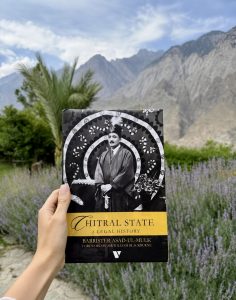
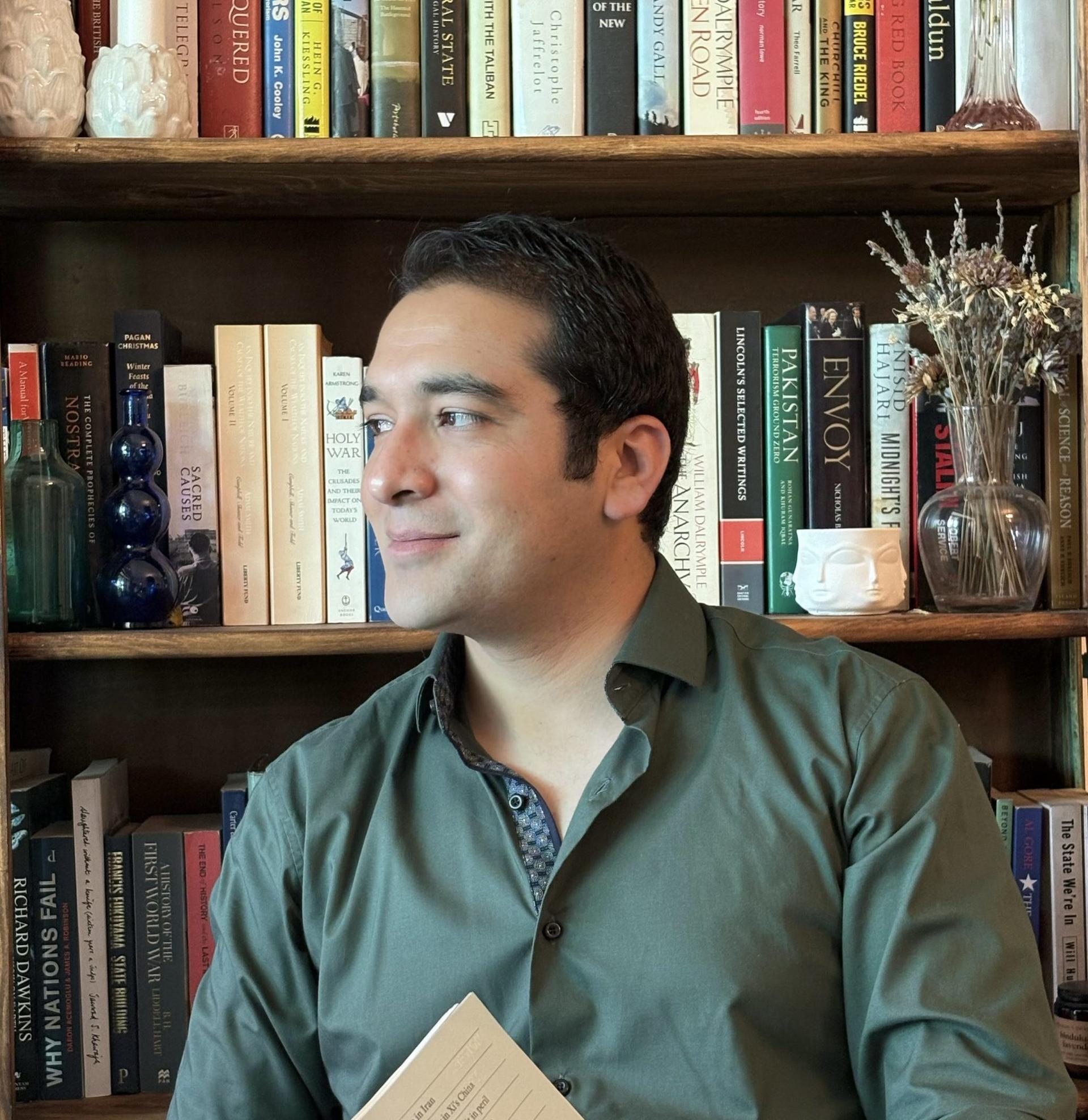
Barrister Asad Ul Mulk is a legal practitioner and a founding partner of the law firm Legal Parameter, based in Peshawar. He hails from Chitral and is a part of the family behind Villa Ayun.
Barrister Mulk was called to the bar of England & Wales from the Lincoln’s Inn in 2016. He specializes in civil, constitutional, regulatory, company, corporate, contract, employment, labour, tort, class action, defamation, inheritance, environment, mining, arbitration, oil & gas and energy related case.
He is also a regular contributor to major Pakistani newspapers such as DAWN and The News International where he writes about constitutional and legal affairs. His writings reflect libertarian values, constitutionalism and fidelity to the rule of law.